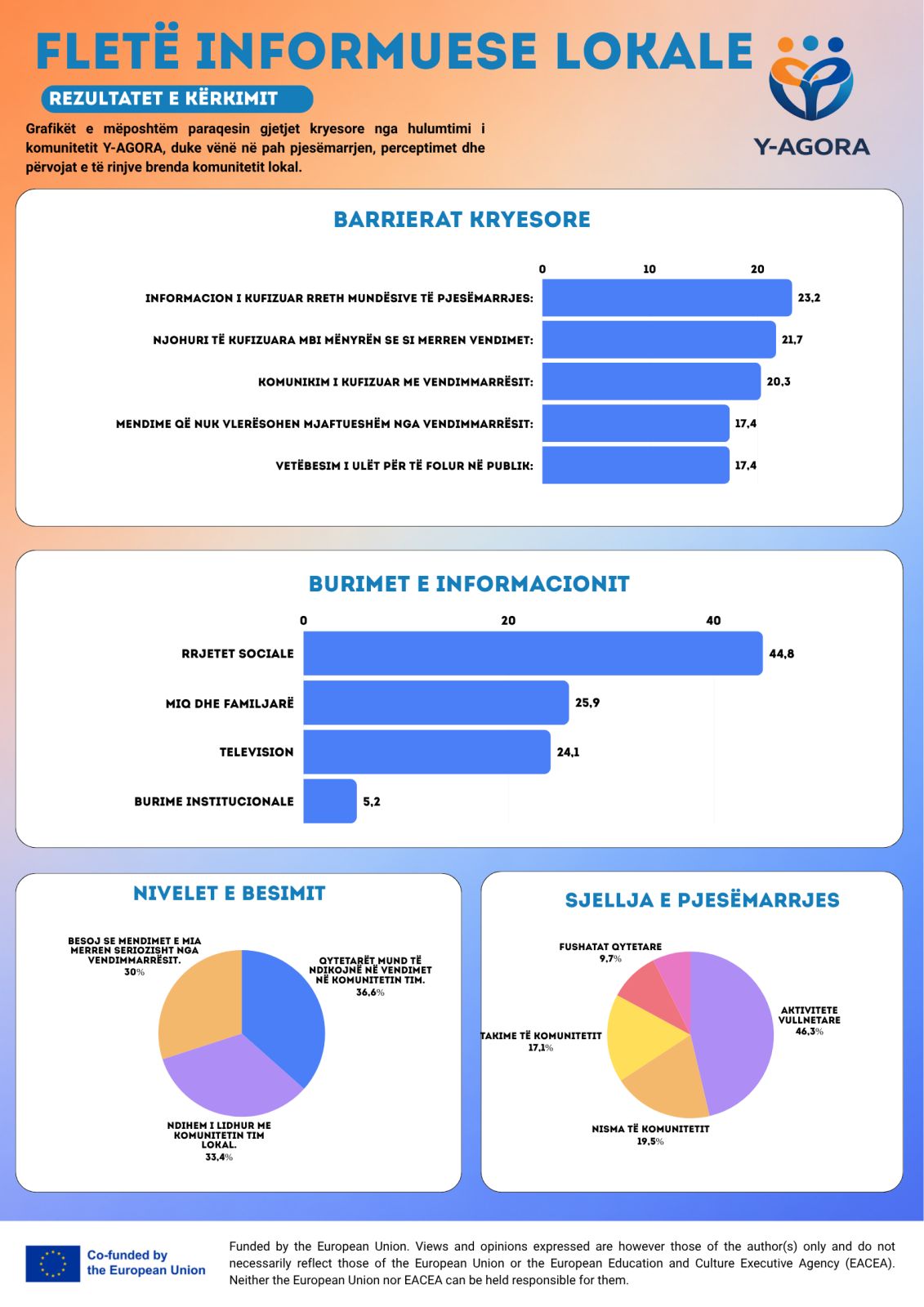




This local fact sheet presents the key findings of the community research in Albania, conducted within the Y-AGORA project with the aim of better assessing participatory democracy, civic engagement, and youth participation at the local level.
Research Methodology
The research encompassed three complementary approaches:
- Desktop research: Review of policies, strategic documents, studies, and local data.
- Youth survey: Collecting quantitative data on the experiences and perspectives of young people.
- Focus groups: Qualitative insights regarding challenges, best practices, and participant recommendations.
Key Findings (Statistics)
- 83.9% of surveyed young people strongly believe that active civic participation and engagement can successfully bring about positive changes in their local community.
- 64.5% of youth report active participation in the work of youth organizations, which represents the predominant channel for youth engagement.
- 51.6% of respondents highlight the lack of clear information and participation opportunities as the greatest barrier to involvement.
Key Challenges
- Lack of information and poor institutional communication: 51.6% of youth lack sufficient information about opportunities, while 45.2% report limited communication with decision-makers.
- Unfamiliarity with procedures: 48.4% of respondents do not clearly understand how local decisions are made and which official channels to use.
- Low trust in institutions: The rating of transparency and commitment to citizens’ interests is low (2.52/5), alongside the feeling that young people’s opinions are not taken seriously (2.77/5).
Best Practices
- „I Vote Too!“ (KIE, KQZ, AKAP): An educational program that reached over 20,000 high school graduates across 335 schools through interactive electoral simulations.
- „Beyond Barriers“ Association (BBA): Local volunteering initiatives supported by European Solidarity Corps policies and mobility frameworks.
- Local Youth Councils: Established in all 61 municipalities in Albania as formal advisory bodies to mayors.
Conclusion and Recommendations
Bridging the participation gap requires shifting from formal structures to open and transparent information, public options, councils, and regular public consultations following decision-making processes. When young people have the opportunity to speak and are included, they are significantly more likely to remain engaged.
Sector Recommendations:
- For youth: Get involved through volunteering and youth organizations, and seek active channels for local participation.
- For educators: Use non-formal learning and methods that go beyond direct institutional contacts within schools.
- For society: Support intergenerational dialogue and community-led actions that address concrete problems.
- For authorities: Develop regular public consultations, make minutes public, and provide feedback on youth proposals following the principle of „You said, we did“.